Saturday, December 31, 2016

It All Begins With Light

Tonight I light the 8th night of Hanukkah candles. I was planning on staying in the New Testament this year, focusing on the stories of Jesus and the 2,000 years of Christian tradition, good and bad, that his followers have developed.

But the Menorah, its nine slots for candles, and the box of 45 candles beckoned me.

The light mesmerizes. Even as a private ritual, the lighting of the lights and the utterance of "Blessed are you Lord God, king of the universe..." opens the heart to so much. How many blessing can I murmer that start with the simple phrase, a profession of faith?

Christianity has its own candles this time of year, but they are unfamiliar to me. We're down home church people, not given to liturgy or the lighting of candles. So, of course, I was curious.

The first night of advent, I sat in a Catholic church. The first of the candles of advent stood waiting in its giant stand. The candle of hope.

It's not too hard to imagine the shadows of oppression the hung over the land of Israel when the prophecies ceased. The world held its breath in expectation that something had to change, that a savior must come . . . and soon.

The second candle of advent (that wonderful word that carries with it the anticipation) is the candle of love. For me, I know, it's a good reminder that, even as I prepare to give as generously as I can to the people I love, there is something about Christmas season that makes it hard to love all the time. The kids are brats, the lines at the store are too long, other drivers on the road are erratic and impatient. And yet, we are called to love. Jesus, when he came, did not love us only when we sat still and behaved. He love us. No. Matter. What.

Week 3 is the shepherds' candles, the candle of joy. We look for joy in the light in our children's eyes as they hang their traditional ornaments on the tree, in the face of a friend when we sip tea and prayer for each other's children. But are we seeing joy . . . or simply a moment of happiness? When the shepherds left their flocks, it was a real life changer, not just a short-term distration.

Next comes the candle of peace, also called the angels' candle. "Glory to God in the highest. Peace on Earth. Good will among men." At that moment in time, it was more than a wish. It was the truth. Glory, peace, and good will had made their entrance.

And at last, after a month of anticiaption, the Christ candle. There is so much to say about what this white candle and the light it brings in the midst of the other means.

I have all year to unpack the meaning hidden in the center light. I know it won't be enough time.

Thursday, June 23, 2016

50 Days Later

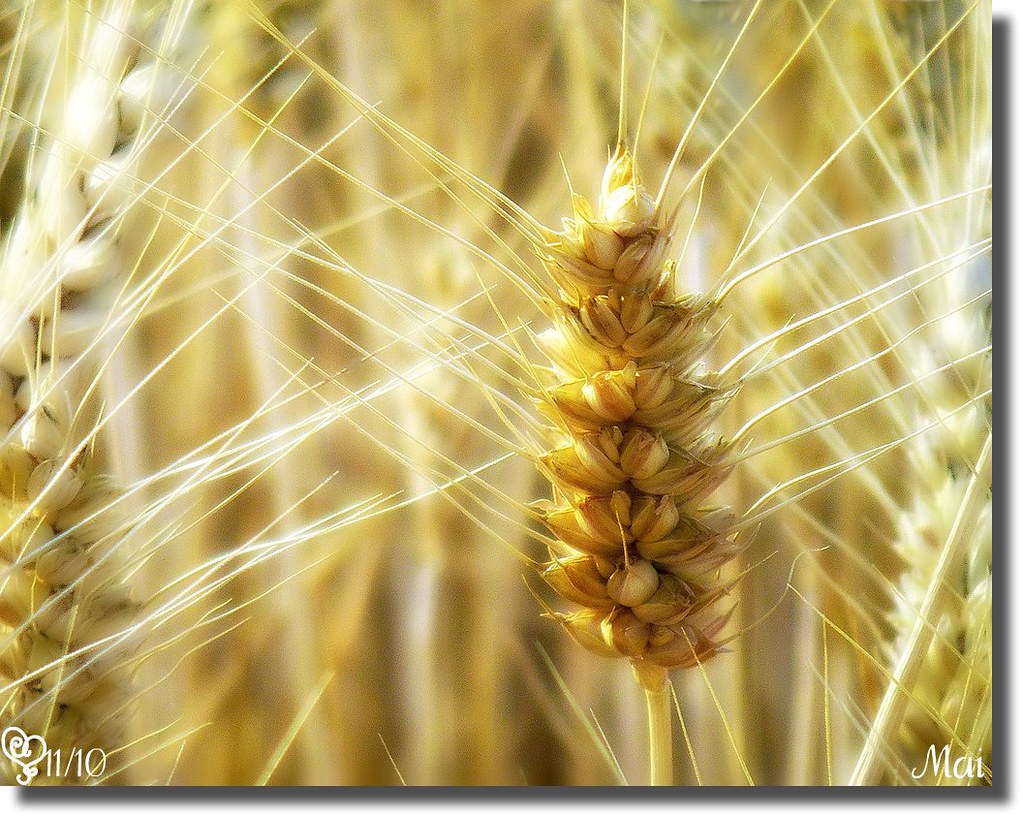
50 days after the first day of Passover come Shavuot. The day, better know to me as Pentecost, commemorates the handing down of the law from Mount Sinai 50 days after the Exodus. But it's not just about the law. There's a lot wrapped up in this little day. Here are some other things it's known as:

The Feast of Weeks
The harvest of wheat in Israel (Festival of Reaping)
The conclusion of the counting of the Omer
The Day of First Fruits (interestingly, this the second observance of firstfruits during the year)
Atzeret (holding back)

In Bible times, the remembrance of this day involved cutting stalks of the first ripening grain and delivering it to the temple (in a basket made of gold or silver, on the back of an oxen with gilded horns. It was a huge procession into the city with parades and music and celebration.

Today's observance has less fanfare. Some groups stay up all night studying the Torah. Others just read through the book of Ruth (a famous story of the wheat harvest). And everyone eats dairy. Cheese blintzes, cheesecake, cheese raviolis, cheesy pancakes... you get the picture.

Pentecost was a big deal to the Jews in Jesus' day, and so was a big deal to those of them who became Christians on that day.

I've done so well all year celebrating each of the feasts, but I didn't get my heart into this one. For one thing, we've got a lot going on at our house these days and I don't have a lot of brain waves left over for this project/experience. Also, as I've celebrated each feast, I've pulled in friends who were willing to participate with me. For some reason, I thought this one was a hard sell, so I "celebrated" on my own. I wish I hadn't. I should have taken the time to acknowledge the importance of God giving his law, of the way he provides through our crops each year, and of how the Spirit descended to earth on the same day as the law once had done the same. There's liberty in that.

I did read the book of Ruth and was struck by how what seems to be such a sweet story of loyalty and love has such an undercurrent of suffering and uncertainty.

I did spend time in my garden which, while not offering any first fruits yet (except strawberries and blueberries), is a good place for me to acknowledge the importance of the life cycle of the year.

I did not stay up all night studying the Torah, though I kind of wish I had. It's the kind of thing that sounds hard and uncomfortable, but I know it would pay rewards that I cannot anticipate. If one of you would like to do this with me one night, I'd be more likely to make it through with some company.

I did not fix a bunch of cheese desserts, though that sounds amazing.

I'm disappointed in myself on this one, like I cheated myself out of the experience of the last true holiday in my Jewish year. There's a minor fast in August commemorating the destruction of the two temples, but by then my head will be deep in plans and dreams for next year, my New Testament year.

In past years, the disappointment would have come because I somehow failed. I set a goal and I did not work hard enough to achieve. Shame on me.

That's not the me of today. Today's disappointment comes from knowing I missed something good and profound. I looked at this feast from the outside and it looked like too much trouble for the payoff. But this one wasn't supposed to be about me. It was supposed to be about God.

Acknowledging his goodness.
Remembering the rescue from slavery.
Seeing the law as a gift for its time and the Spirit as the true gift for all time.
Thanking him for feeding us, for bringing food up from the dirt.
And cheese.

Photo credit: maiptitfleur via StoolsFair / CC BY-NC-ND

Saturday, May 14, 2016

Passover (Part 3 of 3)

The first thing you may notice is that there are no photos to go with this post. That's because the Jewish family we spent the Passover Seder with does not use cell phones (or any other electronic devices) on the Sabbath. They also don't drive, do certain kinds of work, or walk beyond the distance their faith tradition limits them to.

It was my first exposure to a family that lives by Jewish laws of kosher and Sabbath. What strikes me looking back on the experience, though, is that this was not an evening of what was not allowed, but an evening to remember, discuss, and celebrate. Removing the distractions of phones, electronics, and other devices served to heighten the focus of the night--a night of freedom.

The invitation to the evening came from Laura, who clearly exhibits a gift of hospitality. We were not the only first-timers at this Seder meal, though I'm fairly certain we were the only non-Jews. 24 of us gathered in a circle in the living room for the pre-meal discussion. We started with the lighting of candles in honor or memory of someone, then a round of introductions with the question, "What makes you feel free?" Answers included sailing, hiking, eating, being at the ocean, and even visiting a prison.

Rabbi David, who came to the family business of spiritual leadership after an early career as a chef (this would become clear later), was at ease with his small and temporary congregation. The main events of the night were laid out by the Haggadah (the 13 steps of the Seder which must take place in order), but he was not bound by the words on the page. Rather, he encouraged any and all to ask questions, to comment, to share what this experience reminded them of in the bigger questions of freedom and slavery.

Their family celebrated a few traditions I'd not seen before:

  • sitting on pillows on the ground (a Yemeni tradition)
  • bringing out a plate of vegetables and dips after the first dipping of bitter herbs into salt water (brilliant idea, byt the way, to stave off hunger as it takes a very long time to get to the meal portion of the night)
  • instead of eating a small corner of the afikoman (matzah), Rabbi David asked us to take at least half a sheet of matzah and to eat it in silence, imagining what it would be like to be in slavery and only have this dry, flat bread to eat
  • During the singing of the Dayenu (the story of how if God had only done this one thing or that one thing, it would have been enough), we were given green onions to whack each other with. Another Yemeni tradition that broke up the evening, especially for the kids. Everyone was eager willing to take a swipe at friends and neighbors.
  • The four children. I have seen this section of the Hagaddah before but skipped it in writing the one we use at home because I did not understand it. Turns out, a lot of people don't understand it. In this section of the Seder, we were asked to consider the four children: the simple, the wise, the wicked, and the one who doesn't know how to ask questions. I listened to the discussion and am still as clueless as before what purpose this part of the evening serves.
Through it all, Rabbi David led the discussion and the Hebrew chants (I was no good at these, but most everyone in the room know how to read them and knew the tunes). He was tuned into the history of each section and was able to explain Hebrew meanings off the top of his head. I think this lent a less formal atmosphere as he was able to go off script and return to the script at will. When we've done Seders at our place, we are tied to the text because we don't have a big picture of what each piece means and where it came from.

Speaking of which, the other main thing I noticed was how Rabbi David was comfortable not knowing an answer. In fact, at times he probably did know the answer, but resisted explaining in order to let us sit in our questions. He later expressed the beauty of the design of Passover as a chance to ask questions, but not necessarily answer them. It piques our curiosity and keeps us coming back again and again. I think I have a lot to learn from this attitude. If I can resist the urge to explain, I can give people around me the opportunity to explore their own ideas instead of being spoon (or force) fed mine.

The meal was, I must say, one the most amazing meals I've ever eaten, all prepared by Rabbi David and his wife because the rest of us did not keep "kosher for Passover" kitchens. It was a generous and amazing spread. (They did have someone to help with serving and dishes) Here are a few of the dishes we ate: Matzah Ball Soup, Garlic Soup, Salmon with Pesto and Edible Flowers, Saffron Cod, roasted root vegetables, roasted asparagus, several salads, matzahs, fresh fruit, chocolate hazelnut flourless cake, macaroons, and matzah roca. There was more--much more--but I didn't have room to taste everything and my eyes glazed over well before I finished what was on my plate. I think they had plenty of leftovers for their second night Seder the following evening. 

The food and wine lubricated conversation around the table as we got to know each other. We listened as families with different levels of involvement and observance talked about what had brought them to this point. I soaked it all in. The children were dismissed to run wild downstairs while the adults sat around the tables and finished the Hagaddah with some singing and the promise to meet next year in Jerusalem.

I didn't want to leave.

Sunday, May 08, 2016

Passover (Part 2 of 3)

Thank heavens for the folks at Renovatus who hosted a Passover Seder dinner and offered an open invite. We reserved our spots, thankful for the opportunity.

 The outdoor setting was beautiful--the thunderstorm ill-timed. We found our spots around tables set with the seder plate and breathed in the sweet air before the rains would come. We don't really get thunderstorms around here, so weren't too worried one would actually materialize.

Just in case, Kevin, the host, suggested we get started and not dally too long. We opened our Hagaddah (that's the booklet that lays out the script for the evening) and read the opening blessing.

And the sky cracked open.

A great bolt of lightning struck with a crack, leaving the air charged and the hair on our arms and legs standing straight up. Everyone grabbed seder plates and ran for shelter.

I guess that's a good reason to keep your shoes on for Passover!

The group of 20 or more made short work of arranging tables inside. We worked through the Hagaddah, sampling matzah and bits of lamb, doing each of the steps of the evening with acknowledgement and explanation of how the Old Testament traditions pointed to New Testament truths. If you've never experienced a Seder meal with a group of Christians, you really should. After my first experiene, communion was never the same again.

On this night, though, I left feeling like I had gone through the actions of the Seder meal, but it didn't get to my heart like it often does. Had it become old hat? Just another tradition that lost its meaning from too much repetition?

I anticipated (and dreaded) going to a second Seder meal in the same week. I've avoided writing about this first Seder because I have so much to say about the second, I am overwhelmed.

Still, there is a value in keeping traditions. Even when they don't reach us at a heart level, they remind us of who we are and where we come from. It was a blessing to share the evening with old friends, strangers, and (especially) one of my girls.

Saturday, April 23, 2016

Passover (Part 1 of 3)

When I started this year of celebrating the feasts prescribed by God in the Torah, the only feast I'd ever experienced before was Passover. I attended my first Seder in the early 90s and it changed the way I experience the Lord's Supper forever. To eat the full meal and recognize how the symbols of communion are threads tied into the tapestry of God's plan thousands of years before Jesus was born is to taste the richness of His mercy.

Years ago, we started celebrating Passover in our own home, inviting different folks to join us around the table and work through the script of the Hagaddah, the booklet to sets the order for the evening.

I know about Passover. This one would be easy.

Or so I thought.

I've had in mind (hanging over my head) that in this year of learning, it wouldn't be enough for me to read books and articles. I needed to interact with modern-day Jews on some level. I thought that would involve dropping in at a local synagogue for a Sabbath day service, but I had no idea how to do that. Can you just walk in the door? Do men and women sit together or apart? Is there some kind of ritual cleansing or class you have to pass to be welcomed?

Passover, I thought, would be the perfect time to face my fear and find an event to attend. I pictured buying a ticket for a Seder meal from a local community center or church group. That would be close enough, right? When I started looking around for which groups were offering Seders, I ran across an event called "An Inspirational Women's Passover Experience."

Just for women? That solved one of my issues. At least I'd know where to sit. And attending a lecture on Passover would allow me to sit back, listen and observe. I can do that. And the fact the event happened the week before Passover meant we could celebrate the holiday like normal, around our own table.

I conscripted my friend Joanne to go with me. She turned out to be the perfect choice. Joanne is not shy, which was great because this event was not a lecture.

A handful of women greeted us at the door and pointed us downstairs to a fellowship hall. Joanne was brave enough to ask if we could see the sanctuary, a large auditorium with pews, very similar to many churches I've visited, except behind the pulpit were displayed 5 copies of the Torah. The congregations 6th copy was unrolled on the podium where a young boy was practicing to do his first reading in front of the congregation. Each of these massive scrolls holds the words of the 5 books of Moses, meticulously hand scripted in tiny Hebrew characters.

Before we even reached the hall, we had met Kathy, and Dana, and Barbara, and Rachel, each one open, friendly, and inviting. The hall was filled with big round tables, the kind big enough to seat 10. I looked for a spot to sit where my back wouldn't be to the speaker.

I still thought there was going to be a speaker.

Rabbi Eve took on the role of facilitator, giving a few words to think about and then directing us to discuss our experiences around our table. Even on the first question, it was obvious we weren't going to be able to pretend to fit in. Our ignorance didn't phase the ladies around our table. They took great pleasure in explaining to us, throughout the evening, the significance of their family traditions, the meaning of words we didn't understand, the reason behind certain rules regarding Passover. One woman, who had grown up in Israel on a Kibbutz, added another layer of explanation as she was able to describe, "in America it is this way, but in Israel, we do it like this."

And the dessert... oh, the dessert! Three decadent Passover approved tasty bites. My favorite was the mini pavlova with blueberry compote. Yum!

After the event, we were again surrounded by a sea of friendly women wanting to know where we had learned about the event, where we lived, whether we would come again. One of the last people we talked to was Laura. She talked about some of the difficulties of Passover, the extra work, the burden of preparation. Then she offered to include us in her family's Passover Seder if we were interested. We'd have to check our schedules. I wanted to go, but I didn't want to. It was a step into the unknown with people I didn't know. That is a scary place to be. I'd get back to her.

I wish I could unpack everything I saw, heard, and thought, but there's too much. Here are a few of the impressions I left with that night.

  1. People are people are people. Each person we encounter comes with a unique history, a story, a memory that makes them who they are.
  2. A Jewish congregation feels a lot like a church family. This is a group with shared history and values. They are (for the most part) happy to be together. They are also happy to see new faces.
  3. It is nice to be welcomed, but can be overwhelming to be TOO welcomed. As a guest, I was happy people talked to me, but for EVERYONE to talk to me was like getting hit with a fire hose.
  4. We can thank our mothers and grandmothers for passing down family stories, recipes, and quirks.
  5. A lot of these women are practicing religion because it is their cultural tradition and their racial heritage.
  6. Some of the questions we asked ourselves felt empty, self-reliant. "How do you sanctify yourself?" "How will you be reborn in the new year?" "How will you sustain yourself?" They left me feeling exhausted. If it's up to me, I can never do it.
  7. The rules are not as set in stone as I thought. At our table, there was a lot of comparison of how things are done in different homes. I think I was expecting uniformity, but found a shared core with different manifestations.

That was last week. This week brought more Passover excitement, which I will write about in my next post.


Tuesday, March 29, 2016

Celebrating Purim

First, as always, a quick history of Purim.

This holiday, while described and established in the Bible, was not one of the festivals commanded by God as part of handing down of the law. Instead, it was established by the Jews in exile after Queen Esther took bold steps to save her people from the wicked plans of Haman.


The fact that this is not a feast established by God but by people probably explains a lot about the drunkenness and silliness that go into the holiday. That doesn't mean it's not a great reminder about some spiritual truths.

Some that stood out for me:

1. There's always a chance I am where I am so God can use me.

2. Being used can be very scary.

3. If I don't step up, God has other plans in place that don't involve me. But not stepping up can also bring some pretty horrible consequences.

Now to the party. It had been a long time since the last feast, Hanukkah. So long, in fact, that I didn't know if I could awaken the excitement in myself to finish this project. Once I started reading about Purim, though, I was all in.

There are several aspects of celebrating Purim. Costumes, the telling of the Esther story, giving to the poor, sharing food with friends, and special dessert cookie. I was all in.

For the guest list, I took the size of our home into consideration. It's a small place. 8-10 is the ideal guest list. It would have to be for ladies only, just for the sake of space. Problem was, I had about 50 "best friends" I wanted to invite. For this holiday, I wanted to have a mix of people who don't usually spend time together. The fact that Purim fell on the same night as youth group also played a factor.

We needed a theme (Royalty) and a menu (Mediterranean) and some activities. Rather than making my guests act out the play, I opted for a short video version of the Esther story. I provided noise makers so we could blow them at the sound of Haman's name, may it be blotted from the earth. (I loved the suggestion that we should take the noisemakers to church next time we study Esther. Wouldn't that be something!)

Throw in a couple of silly games and a bunch of balloons and we were good to go!

Purim wasn't so much about learning deep spiritual truth. It was more of a chance to celebrate life, to laugh at the dying winter, and to make connections with new people. I wish I could have invited every woman I know (guys, too, but you have to draw the line somewhere).

Next up is Passover and then Shavuot (Pentecost) and then my year of Jewish Feasts will come to a close. I'm already finding myself waxing nostalgic, though I've still got some months to go. I've shared this year so far with a lot of people (the social aspects of every feast have surprised me. God used the calendar to build community). If you've wanted to join in on one of the festivals and haven't had a chance, contact me about Passover (at the end of April) and Shavuot (at the beginning of June).


Saturday, January 02, 2016

New Beginnings

As we ring in a new year, I turn the page in my Bible to start the book of Exodus. I am excited to leave the partiarchs behind and to see how God establishes covenant not only with one family, but with the nation that came from them. How appropriate that the reading in Exodus starts as the new year begins.

Only it doesn't always happen that way. Becuase the Jews use a lunar calendar, the Torah readings float to different dates (not in their year--in their year they stay the same, but relative to the western world, they shift). Next year, they won't reach Exodus until the middle of January. By then, I hope to be well into the New Testament.

I have no deep or astounding insights to share this week. Honestly, once we packed away the Menorah, we also packed our car and headed out on a 4,000 mile road trip to pick up kids from college and to spend Christmas with family. My Jewish year did not demand my attention and I did not offer it.

Now begins a long spell between holidays. I will try to post the Torah portion and my reflections each week as I am able. Otherwise, I look forward to Purim, Pesach, and Pentecost.

This Week's Torah Portion:
Exodus 1:1-6:1
Isaiah 27:6-28:13, 29:22-23
Luke 5:12-39

Saturday, December 12, 2015

One Light to Rule Them All

Every night this week, we lit candles. Each night the light grows brighter and we remember the miracles and good works God has done.

A large fee waived.

A friend's brother, missing in a flooding area, found.

A friend's mother released to go home to heaven.

A child making a big choice for her future.

The world around us is a mess, but God's light shines in the darkness.

Last Sunday, we spun the dreidel, a simple little game of chance whose purpose is to remind us that "A Great Miracle Happened There." We ate jelly donuts and chocolate coins and thanked God for keeping us alive, sustaining us, and allowing us to reach this season.

For me, Hannukah has been a light-hearted holiday. It is a minor holiday in the Jewish year and does not carry the burden of atonement or judgment. It is simply a time to recognize light in darkness, victory over oppression, and the possibility of miracles.I

 was interested to note that Jesus celebrated Hannukah. I was hoping he used the day to say, "I am the light of the world," or tell the story of the unprepared virgins. Instead he said, "I am God's Son. I have been set apart." This brings to mind that Hannukah is about dedication, or making the temple holy again. Jesus is saying he is the temple AND he is already holy. No need to rededicate something that was never defiled.

Hannukah is all about victory, deliverance, healing, miracles, holiness, and ressurection. Sounds familiar to me. The Jews were looking for someone to rise up and overthrow their Roman oppressors, like the Macabees had done to the Syrians. Jesus had plans to overthrow a much greater oppressor.

I don't know if there's any symbolism intended in this or not, but when lighting the candles of Hannukah, there is one candle set aside to light the others. It stands higher than the other lights and burns for all 8 nights. I picture Jesus as this candle. He is the the constant, the light source, the one who turns us all into lights in the world.

This week's Torah Portion:
Genesis 41:1-44:17
Zechariah 2:14-4:7
John 2:12-4:42

Photo credit: slgckgc via VisualHunt / CC BY

Saturday, December 05, 2015

Lighting the Lights

And now, a break from the regularly scheduled Torah readings in order to lay some groundwork for the next feast. Hanukkah is not an Old Testament Feast, not one of the holidays set up by God in his rhythm of how the year progresses for his chosen people. But it IS a biblical feast in the sense that Jesus, as a cultural Jew, celebrated Hanukkah. And if it's good enough for Jesus, it's good enough for me. This year, since we're traveling over Christmas, we're leaving the Christmas lights tucked away and pulling out the Hanukkah menorah to light instead.

The Feast of Dedication begins tomorrow at dark. As we count down to the darkest day of the year (in the northern hemisphere), we celebrate a violent victory with candles, games, songs, and (best of all) fried food and jelly donuts.

After their exile in Babylon, the Jews returned tot he promised land and set up a fairly peaceful, fairly prosperous society. They remembered the laws and commandments God had set forth and added structure to them to help keep them on track. They kept the first commandment, to worship only God, and the second, to not build or worship idols, despite the fact that all the cultures around the worshipped a pantheon of gods.

Enter the Greeks, stage right. This empire valued beauty, brains, and brawn. The Greeks believed in a whole family of gods with lives and stories as complicated as a soap opera. The Greeks believed in spreading their culture wherever they went. They were the cool kids of the 2nd century B.C.

In 175 B.C. Antiochus IV became king of Syria. (There's that pesky piece of real estate again!) Antiochus decided that all Jews should become Greeks. Some Jews jumped right on board, adopting the fashion and the language, and adopting Greek names. Most, though, didn't convert quickly enough for the Syrian king's taste. He sent his soldiers out to burn Jewish scrolls and kill anyone who would not worship Zeus, the head of the Greek pantheon of gods. Antiochus went so far as to build an altar to Zeus in the Jewish temple in Jerusalem and have a pig sacrificed on it.

Several years into this "scrubbing" of Jewish thought and practice, Syrian soldiers tried to use an old Jewish priest named Mattathias to sway the tide of Jewish thought. If they could get this priest and his sons to bow down to Zeus, surely the rest of the nation would follow. They didn't expect resistance from this elderly priest, but then, they didn't know him. He wasn't about to bow down to any god but the one True God, and he certainly wasn't going to kill a pig to eat it (another of their bright ideas).

When one of the members of his mountain village stepped up to bow before the altar to Zeus, Mattathias flew into a rage. He killed the traitor and a soldier nearby. He tore down the altar to Zeus, then fled with his sons and anyone who would follow them into the mountains. There, this ragtag group that called themselves the Maccabees (the Hammers) staged a revolt. Armed with only sticks, rocks, and farm tools, they waged war against the Syrian army and their modern warfare supplies and tactics. In battle after battle, the Maccabeeans sacked the Syrians. The Jews had to win. They had more to lose.

They also had the Spirit of Almighty God raging inside them.

It took 2 years, but the Hammers sent the Syrians packing and won the right to worship who and where and how they wanted, which was as God commanded. Legend says that when they marched into Jerusalem as victors, though, they found themselves grieving instead of celebrating. Their beloved temple had been trashed, their books and candlesticks stolen. They needed to cleanse and rededicate the temple--and fast. And it would take eight days for them to make ritually clean, kosher olive oil for the task. "Luckily" they found a flask of oil with only enough to light the menorah for one night. They needed enough for eight nights, but this was all they had and they didn't want to wait. They lit the lights that first night, and then the second and third. Miraculously, the one drop of oil lasted the whole week.

Feast of Dedication. Festival of Lights. Hanukkah is a celebration of God's miracles. It's a chance for me to watch for miracles small and large in my own life and to remember that the God who worked miracles for his people back then is the same God I worship today.

Jesus celebrated Hanukkah in John 10. I'm going to visit that passage this week as we light the candles and celebrate miracles around our own table. For now, I plan to start jotting down the miracles I see around me on the white board above our dining table. I expect to be surprised.

This week's Torah portion:
Genesis 37:1-40:23
Amos 2:6-3:8
John 2:13-4:42

Photo credit: nonnygoats via Visual hunt / CC BY-NC-ND

Saturday, November 28, 2015

On Stairways and Mandrakes and Worshiping God

I started this week's reading back at Harran, on the border of modern day Turkey and Syria. This little strip of land has a habit of making history, doesn't it? Here Jacob laid down to rest on his flight from his homeland to his uncle's place (and his mom's hometown).

I think of Joseph as the dreamer of dreams, but it seems his dad had dreams of his own. The image of Jacob's ladder, of a stairway leading to heaven with angels going up and down it, rings in our collective consciousness. Jacob's ladder--it's been used to describe the beams of light slicing through the clouds, a child's toy of blocks and ribbons, electrical rods with a spark dancing between them, and a torturous exercise machine

In that place, in that time, a common monument was the ziggurat, a huge rectangular structure with stairs leading up its face toward heaven. At the top of the ziggurat was probably a shrine, dedicated to the worship of the moon goddess. The parallel wouldn't be lost on Jacob, who saw a ladder that went much higher than a building, the a place much safer than a shrine.

The symbol also was not lost on Jesus, who told Nathaniel, "You will see heaven open, and the angels of God ascending and descending on the son of Man." There are so many layers to this story of Jacob as the father of nations, dreaming of Jesus, the savior of nations...of the Lord standing at the top of the staircase making promises to Jacob, and of Jesus being the staircase that leads Jacob and his people to heaven... Jacob knew when he woke up that he was in a special place, so special, he took the stone he'd used as a pillow (ouch), turned it on end, and left it as a pillar, a witness that what had happened there.

Jacob wasn't the only one dreaming in this story, either. Laban had his own dreams. Lest I think dreams are a revelation from God to his faithful followers, I keep reading to see that Laban practiced divination and worshiped his own gods. Besides, he was a greedy sneak and a liar, to put it mildly.

Jacob's marital relations with his two wives and their servants read like a soap opera. It was a household of jealousy and intrigue, laced with moments of triumph and vengeance.

Here's a story that popped out to me, one I never heard in Sunday school--the story of the mandrakes.

These are not the gnarly little plants that you have to get potted while they're babies so they don't kill you when they attack you. They're an herbal medicine and they're meant to cure infertility. Leah's son Levi found some and brought them to his mother like a good son would do. I can just hear it.

LEVI: "Here, Mommy. I brought you some roots that will help you have another baby."
LEAH: "Thank you, darling. I'll brew them up right away."
RACHEL: (tapping on door) "Did I hear someone say they've got mandrakes? I've been dying for some mandrake tea. Can I have some?"
LEAH: "Well, I don't know..."
RACHEL: "I'll let Jacob spend the night with you."
LEAH to LEVI: "You heard her. Give her the mandrakes."

I guess in a way, the mandrakes did help Leah get pregnant.

The story goes on to tell of how Jacob controlled the color the sheep and goats he bred would be based on what color sticks they looked at while drinking water, how Rachel stole the family idols and said she was on her period so she wouldn't have to get off her camel and reveal the stolen idols. It's a complicated story. There's lying, trickery, idols, hard work and dedication, true love, rivalry, jockeying for power, and more intrigue than an adventure movie.

With all the themes it dances around, the one I keep coming back to is the fact that Jacob somehow worshiped the one true God while everyone around him had the whole pantheon as a backup plan. When we lived in Africa, I wrestled with how to treat the voodoo priestess who sold me sugar, the men in the voodoo market who called out to me as I walked between their stalls of dried animal parts and amulets, the Christian friend who consulted the witchdoctor when her child was sick. But I never wanted to take part in any of their rituals or to pay homage to their gods.

Now, back in suburban American, the thought of having other gods is much more subtle. We don't typically bow down to or feed actual idols, though we do have our own gods set up on TV stands in a prominent place in our living rooms or tucked into our wallets. Lately, though, I actually found myself bowing down in front of a statue of Buddha in a yoga class. I had to struggle through whether to keep going to class if Buddha was going to be sitting in front of me. My teacher has graciously agreed to leave Buddha tucked in his closet on the mornings I am there, though I'm sure she doesn't understand my objection. The last thing I want to do is close a door on relationships because I am too judgy. On the other hand, I have to live with myself and doing the child's pose in front of sitting Buddha is too reminiscent of the story of Shadrach, Meshach, and Abednego to be comfortable.

What else do I bow down in front of without thinking about it? What else consumes my thoughts, my dreams, my time? I have my list, some parts of which are easy to identify, others of which I'd rather not acknowledge to myself much less in public. Like Rachel sitting on her camel, using her time of the month as an excuse, I justify my habits and vices as normal expressions of my culture. And, for some reason, I'm resistant to even name them much less work on them.

God convicts at the most inconvenient times. Thanks a lot, God. Thanks a lot.

This Week's Torah Portion:
Genesis 32:3-36:43
Hosea 11:7-12:12; Obadiah 1:1-21
John 1:19-21

Photo credit: Giorgio Samorini via Visual hunt / CC BY-NC-SA

Sunday, November 22, 2015

Laughter

It amazes me how different aspects of life layer on top of each other, intersecting, overlapping, events and ideas being colored by other events and ideas. I wrote about Isaac yesterday, about how his story is an in between story. Then I sat in Bible class and then church this morning and heard the story of Isaac in a completely different light.

If you were at my church, you probably didn't hear anything about Isaac this morning. The texts came out of Nehemiah and Philippians, not Genesis. And if you sat by me (Andrea), I'm sorry I was so squirmy, but I had synapses firing on so many levels, my mind was abuzz.

What I missed in the story of Isaac was the laughter.

His mother laughed when she heard the promise he would be born, but that doesn't explain why Isaac was named "He Laughs." If he was named for his mother's lack of trust, he would have been named "She Laughs" or "She Didn't Believe." But Isaac's name was Laughter.

In Nehemiah this morning, we looked at a people so serious about restoring their relationship with God that they spent weeks in confession, study of scripture, and public mourning. Their mourning did not end in shame or sadness, though, but in celebration and joy. I invite you read my friend's blogpost about joy in the face of mercy here. As Kristy says, "Grace is accepting the consequences and then releasing them to the wind."

For the sermon, we turned to Philippians 4. The subject was giving--do we use our money for happiness or for joy? What I heard was that joy--capital JOY--always happens in relation to others, whether the people we are with or the God we serve.

That's what was missing in the story I told yesterday, the story bubbling beneath the story. Isaac's entire story is told in relation to his parents, his children, his wife, his neighbors. It is told, especially, in relation to his God. In his story, we catch glimpses of the story of his life. He went to a field to meditate. He received God's promise. His neighbors noticed that God was on his side. He sought peace.

Underneath the story of the sacrificial child, the father of twins, the foolish old man, runs a story of laughter and joy.

In this week that is all about giving thanks to God for his bountiful blessings, I pray you will seek connections with people and with God and that you will find JOY and LAUGHTER, no matter what your circumstances. I will be aiming for the same in myself.

Photo credit: Arnett Gill via VisualHunt / CC BY-NC-ND

Saturday, November 21, 2015

Sandwich Generation

Reading the Torah portion this week on the life of Isaac, I couldn't help thinking how different his story is than that of his father and his son. Abraham was specially chosen to be the father of nations, the one through whom God's chosen people--and, eventually, God's own son--would come. Abraham received the promise and took part in the covenant. Jacob (as we'll see next week) had his own adventures. But Isaac? Isaac is the middle child of the patriachs, All the stories we have of him tell about him in relation to someone else. He's one in the list, but what do we know about him, really?

Birth

The story of Isaac's birth is really the story of his parents. But isn't that how it is with all of us? Isaac's birth is a tale of faith and doubt, of laughter and tears, of Abraham and Sarah. Isaac, the promised child, is incidental in the narrative, more a chess piece in a strategy game than a character in his own right.

Sacrifice

In the very disturbing story in which Isaac is laid out on an altar to be sacrificed at God's request, he only gets one line. The boy (or is he a young man?) asks his dad why they didn't bring a lamb to sacrifice. That's it. If I was writing the story, I would be tempted to tell it from Isaac's point of view. After all, didn't he have the most to lose? But we don't even get to see him squirming on the altar or jumping down in relief when his dad untied him, or huffing off in anger at a god who would jeopardize his life for the sake of testing his dad.

Marriage

The story of "Isaac and Rebekah" takes up 6 columns in my Bible. Guess how many columns Isaac gets? An incidental little mention at the end, that he went into a field to meditate and that he took Rebekah into his mother's tent for the wedding night. He got his name in the heading, but this is not really the story of Isaac. One the surface, it's the story of a servant, an uncle, and a woman brave enough to run off and marry a total stranger. Yet there's another story bubbling underneath

Sons

Jacob and Esau. What can I say? They steal the show. How different they are as twins, even from birth. How they struggle and fight against each other all their growing up years. How Rebekah loved Jacob so much more than the older brother. Where is Isaac in the story of his children?


Old Age

Now the boys are grown and Isaac is old. Here we get the fullest description of this man who has remained, for the most part, a two dimensional character. And the look we get is not all that flattering. His sight has gone. He comes across a bit doddering while his wife plots behind his back (with the help of Jacob) to steal the blessing of the firstborn. He knows something's wrong when Jacob comes to him, but he falls for the trick and gives his blessing to the wrong son. Then, when Esau comes for the blessing, Isaac is powerless to give him one. The best he could say was, "Eventaully, you'll get made enough to escape slavery. Isaac comes across and stupid and impotent in this story. The foolishness of his actions overshadows the eloquence of his blessing.

Death

I almost didn't mention Isaac's death. It's sort of buried (sorry!) in the middle of someone else's story, several chapters after he must have already been gone. He lived. He died.

He was the son of someone important. He was the father of someone important.

The end.

Only not quite. In telling the life of Isaac, I skipped one little story, one that stood out to me as weird and interesting. It starts with Isaac passing off his wife as his sister, a little ploy his dad used more than once. When Abimelek finds out Rebekah is his wife, he institutes a hands-off policy which allows Isaac to plant crops. His fields were super successful, so much that he was asked to leave because he had become too rich and powerful. He moved away for the sake of peace. That night, God appeared to him, promising him the same things he'd promised Abraham, but this time the promise was to Isaac.

And Isaac built an altar and called on the name of the Lord. And the people around saw clearly that the Lord was with him and came to make peace with him. And he dug a well and found water and called that place Beersheba.

I feel like it's taken me a long time to get here, but as I read through the stories of Isaac, frustrated by the fact that he is not featured in his own stories, I'm reminded that none of our stories are our own.

I was with my aunt recently, who is not much older than I am. She is truly in the sandwich generation, caring for both her children and her parents. She doing an amazing job, juggling work and family, watching after elderly parents in two searate care facilities.She's overworked and exhausted. She's also got to feel invisible, like she only exists to care for those older and younger than she is.  I wonder if Isaac ever felt that way?

Or did he feel more like the middle child, not the obedient older child who did everything right (Abraham) or the youngest scamp, always getting into trouble and demanding attention (Jacob).

Or did he, like most of us, feel like he was the key player in the story of the world? Did he think he was the star or was he content to be an extra?

What I've processed this week has been more observational than confessional. Except it makes me think that for those of us who live a quiet life, there seems to be value in holding the generations together, in bridging the time between the superstars, in waiting for the next promise to be fulfilled. And for us middle children out there, isn't the stuff inside the sandwich at least as important and interesting as the bread it's squeezed between?

This week's Torah Portion:
Genesis 28:10-32:3
Hosea 12:13-14:10
Matthew 3:13-4:11

Photo via Visual Hunt

Saturday, November 14, 2015

Jehovah Jirah

 This morning, as my newsfeed lights up red, white and blue in mourning and empathy for the people of France, I wonder what the story of the birth of Isaac has to do with all the pain raining down on the world today.

And then I see it, the gem of hope. Among this week's stories about the long awaited birth of the promised son, the search for his wife, and the death of his parents Abraham and Sarah, we find the name of God.

Jehovah Jirah.

The Lord Will Provide.

He provided a sacrifice in place of Isaac. Won't he provide for the people of Paris as well? The song, linked above, was sung in the tunnels of Paris. Listen to the heart of the words from Isaiah 54:10.

Quand les montagnes s'elloigneraient
Quand les collines chancelleraient
Quand les montagnes s'elloigneraient
Dieu fera tout comme il promet.

Son amour, oui, son amour,
ne s'elloignera point de toi.

"Though the mountains be shaken and the hills be removed, yet my unfailing love for you will not be shaken nor my covenant of peace be removed ," says the Lord, who has compassion on you.

Today, we lift Paris up in prayer, that the people of this beautiful city will seek solace in the empty cathedrals and that they will find a God who is faithful and whose compassion and unfailing love do not change even when the world around them is in shambles.

This week's Torah Portion:
Genesis 25:19-28:9
Malachi 1:1-2:7
Luke 3:1-18


Saturday, November 07, 2015

Forgetting to Breathe

I've been on the run this week...all week...and all good. But, as I struggled with early in this year of intentionally paying attention to Old Testament spiritual rhythms, just because something is good does not mean it is best.

What that translates to is I allowed old habits to take over and forgot to carve out any moments to sit still. I've guarded my Saturday mornings to be able to contemplate the text for the week, but this morning I have no time for contemplation. I've filled my day with work, activities, friendship, family, and music. I'm looking forward to almost everything on my list, but I am finding myself missing the quiet morning moments to breathe in the story of God's people.

A frend of mine recently introduced me to yoga. It has been a great alternative exercise during a season when I am not able to run or hike because of an ankle injury. I love the deep stretches and slow movements of the hour we spend working out the kinks in backs, hips, and necks. I often find, though, that until our guide reminds me that I should be breathing out or breathing in with a particular stretch, I have forgotten to breathe at all. When I fill my lungs with air, hold it for a few seconds and breathe it all out, I feel the tension loosen in whatever muscle I am working on. When I hold my breath, I'm a giant ball of knotted tension.

That's how I feel this morning, like I'm holding a stretch and I've forgotten to breathe.

This week, I must remember to breathe. I have a wonderful opportunity for it as I go on a journey with God's people, a retreat with a bunch of church planters. I can't tell you how excited I am to sit with people who live on the front lines of God's advancing kingdom. I anticipate their presence and energy will force me into deeper stretches of my soul.

Have a good week. And don't forget to exhale.

This Week's Torah portion:
Genesis 23:1-25:18
Malachi 1:1-2:7
Luke 3:1-18

Photo via Visual Hunt

Saturday, October 31, 2015

Family Feud

The Torah portion this week started with God calling Abram from where he and his family had settled in Harran to the land God would show him. Immediately I placed an imaginary map of Abram's journey over the story and followed him as he traveled south as far as Egypt and then back north toward Damascus.

I wanted to know where Harran lays on a modern map. Turns out it is just inside the Turkish border, about 17 miles north of Syria. Damascus is in Syria, too. Heard anything about Syria in the news lately?

My entire reading of this week's text was colored (how could it not be) by what is happening today on the very ground Abram and his family traveled through. Here are the stories of the births of nations and of Judaism, Islam, and Christianity. We all find our roots in the story of one man and his children. The very land God gave him is still riddled with horrific fighting between the descendants of Abram's two sons.

In Genesis 13:8, between Bethel and Ai (north of Jerusalem in the West Bank), Abram told his nephew Lot, "Let's not have any quarreling between you and me, or between your herders and mine, for we are close relatives." And they divided up who would use what land to avoid a family quarrel. If only Abram had been able to pass this attitude down to his children!

God forged a covenant with Abram and made him some promises.* First, he would give him a huge family that would bring blessing to the entire world. Second, he would give them a chunk of land along the eastern edge of the Mediterranean Sea that would be theirs forever.

And they all lived happily ever after...

...or they would have if Sarai, Abram's wife, hadn't gotten impatient with how long things were taking. Oh, my goodness, how I relate with Sarai. I can just hear her talking in circles around Abram, wondering aloud for years and years when God is going to hurry up already, finally suggesting a plan that would "solve everything" if Abram would just sleep with her maid, Hagar. Okay, that part of the story I really don't relate with. I am NOT handing my husband over to some other woman, nor can I imagine a situation where that would be a good idea, but I did not grow up in a time and place where polygamy was accepted and expected, so who am I to judge?

I do relate, though, to Sarai, when Hagar is pregnant and start treating her wrongly, blaming it all on Abram. Of course it's his fault. Never mind that the whole thing was Sarai's idea, it's definitely his fault.

An angel of the Lord reassures Hagar about her baby, telling her it will be a son and his name will be Ishmael. That's where the reassurance ends. The next thing out of the angel's mouth is "His hand will be against everyone and everyone's hand against him, and he will live in hostility toward all his brothers." Remember that Ishmael became the father of the several Arab tribes, and the beginning of the family line of Mohammad, the founder of Islam. Has a truer prophecy ever been spoken?

God reiterates his promises to Abram, and requires of him a sign that the relationship goes two ways. Abram and all his male offspring are to be circumcised. I've never understood this one, but I'm not a guy. I supposed if I thought about it, I could draw all kinds of parallels about circumcision being intensely personal and a true sacrifice. I could, but I won't. Suffice it to say I'm glad my circumcision is one of the heart.

Abram AND his son Ishmael (and all the other guys in the family) underwent their circumcision and God promised a child to Abram and Sarai once again.

And Abram cried out to God, and said, "If only Ishmael might live under your blessing!"

This part surprised me. I thought God would say, "Nope. That wasn't our deal. No blessing for Ishmael."

That's not what he said. God's response was to bless Ishmael as the father of rulers, of a great nation. There were enough blessings to go around. But for Ishmael, there was no covenant. That was reserved for a child not yet born.

I feel like I've used too many words to say so little here. Buried in this story are the beginnings of a battle between nations that still rages on and hasn't really moved from its birth place. The war in Syria rages on with all its religious undertones not even trying to hide beneath the surface. These nations (Jews and Muslims and Christians alike) are scattering across the globe, looking for anyone who will take them in. And I wonder, where is my part in this? When a Muslim Syrian refugee ends up in my neighborhood, will I treat him any different than if he were a Christian refugee? Or a Jew? Or a Kurd? This question is one I will have to wrestle with. I don't think it's a question of "if" but of "when."

Is the Muslim immigrant destined to be my enemy, a truth set in stone by the word of an angel of the Lord thousands of years ago? I don't think so. My Muslim neighbor is my neighbor, and I know how Jesus thought I should treat her. I might not be able to change the course of history or stop the war in Syria, but I can love my neighbor, whoever it might be.

*This is the third covenant God has made in three weeks of readings. I would like to come back and explore the concept of covenant later in the year, maybe when I anticipate getting bogged down in Numbers.

This week's Torah portion:
Genesis 18:1-22:34
2 Kings 4:1-37
Luke 2:1-38

Photo credit: mark lorch via VisualHunt / CC BY-NC

Saturday, October 24, 2015

On Floods and Promises

It took one chapter for God to create the universe, one chapter for him to get mankind settled in the garden, one for mankind to screw up that arrangement and call down curses on farmers and mothers and everyone else.

With such an abbreviated story of beginnings, it's a little surprising that a full five chapters is given to the account of Noah and his family and the flood the killed everyone else. It must be an important story to garner so much real estate. This story hasn't sat well with me a long time. Sure, we decorated the twins' nursery with Noah's ark--what else are you going to use for kids that come two by two?--but even as a child, the idea that man could have been so horrible that God would scrap the whole experiment and start over from scratch brings up a picture of a creator so impatient and so vindictive that he doesn't even resemble the God we know today.

"The Lord regretted that he had made human beings on the earth, and his heart was greatly troubled." He decided to wipe out humans and animals. I know there's mercy in the flood. I know he could have wiped out everyone, but decided to saved one family. I know the entire history of mankind could have lasted less than six chapters. I know he saved the animals through the ark and I know he made a promise with the rainbow, but it doesn't mean I like the story. Floods are such a destructive, violent force, it makes me want to skip that part of the story and hop right to the rainbow.

Isn't that what we've always done? We highlight Noah's righteousness, the building of the ark, the cute animals, the dove and its olive branch. We skip the desperation of people trying to reach high ground, of rivers raging through villages, consuming homes and the families inside, and the awkward part of the story where Noah gets drunk and is found passed out naked in his tent by Ham, who got a good laugh out of it for a minute and then his family was cursed forever.

Dov Landau, Professor of Jewish Literature at Bar Ilan University suggests the story is there to return us to wonderment. In Jewish thought, mankind's ability to question and wonder set the basis for morality. Wonderment brings fear. Fear brings moral restraint. Moral restraint brings religious restraint. Without questions and wonder, morality decays. He also reminds us that death to God is not nearly as permanent as death to us.

And still I am unsatisfied. And so I skip to the end (as usual) where God set a rainbow in the clouds and makes a covenant with Noah--and really with all of us--to never use a flood to destroy the earth again. I took the picture above the other night at sunset. As we drove through town, people stood on every street corner trying to capture the moment of promise on their phones. Some of them might see a rainbow and remember the promise. Others might have rejected the story, or might not even know it. But everyone was drawn to the spectacular display.

Remember? He seems to whisper... I have the power to wipe you out. But I won't. Not now. Not in that way.

I promise.

This week's Torah Portion
Genesis 12:1-17:27
Isaiah 40:27-41:16
Matthew 1:1-17

Saturday, October 17, 2015

The First Torah Portion

I was going to sit down this morning and tell you a lie. I was going to write about how my Torah reading this week (while good in itself) took all my time so I couldn't do my study for ladies' Bible class. I was going to say that having time to read and study double portions of scripture is a luxury for those who don't have to work, how it reminds me of how Tevye dreamed of having time to sit in the synagogue and pray, but only the rich could afford to spend their time like that. Then I thought of how many hours I spent this week with my injured ankle propped up watching stuff on Netflix. It's not that I didn't have time. It's how I chose to spend that time.

I started out last Saturday with new resolve. I wanted to not only READ the Torah portion, but WRITE it in my own handwriting. So I did. This practice of slowing down the scriptures lets you see all the words and allow them soak in at a different rate than they do when you simply read them. Listening to them aloud also gives a different perspective. This week, though, was for writing.

It took me all week to write out the five chapters and eight verses that started out the Torah reading for this year. Half the time, I was peaking ahead to see how many more pages, how many more columns I had to write. I got bogged down in the genealogy, even though it's pretty short and has some interesting plot twists.

I made a lot of mistakes, words I had to cross out because I wasn't paying attention, that I assumed I knew because I'd read these passages so many times.

I would have made a terrible scribe.

Unlike the scribes, though, I've given myself permission to make mistakes. They remind me of the quilters and artists who used to make one deliberate mistake in their work in order to illustrate that God is the only one who is perfect. While I hate to have scratched out words in my hand-written Bible portion, it is visible reminder that I'm not perfect except by the grace of God.

I don't expect to keep up with writing the Torah portion this year, but I am making the goal to write out at least the narrative portions. I think it would kill me to hand-write the Levitical laws and the census of Numbers. Does that make me lazy or realistic?

As I read over what I've written above, it comes across as very self-centered. In the midst of reading about the creation--how the entire universe (or universes, though I can't wrap my head around that one) fell off God's tongue tip, how he spoke worlds and solar systems and galaxies into existence, how he breathed life into what he had made--in the midst of all that, I chose to tell you about me.

That's because I am the center of the universe.

The same thing struck me about the creation account. All that God made is so vast, it makes my head ache to think about it too much. But the creation account, what is written in the first chapters of Genesis, place the earth and the garden in the very center of creation. The story revolves around one planet, one garden, one man and one woman.

When I tell my daughter about the day she was born, I leave out the extraneous stuff. The story doesn't include anything happening in other towns to other people. It's all about the two of us (with a couple of nods to her dad). I tell her about how cold it was, how the roads were iced and the snow was falling. I tell her about how I felt when, after hours of hard work, I finally held her and looked into her eyes for the first time. I can almost feel that rush of emotion again, just thinking about it.

The creation story in Genesis struck me the same way, like it's God' telling us, his children, about the day we were born. He left out a lot of details, but he told us the parts he knew we'd like to know. He centered the story around us, his children, because he loves us.

This week's Torah portion:
Genesis 6:9-11:32
Isaiah 53:55:5
Luke 1:1-80

Photo credit: Lawrie Cate via VisualHunt.com / CC BY

Tuesday, October 06, 2015

Finnegan, Begin Again

First of all, wouldn't it be awesome to have a holiday to celebrate God's word? What a great reminder of how he speaks to us, instructs us, prods us, and exhorts us. I think we should institute a party to say, "We read the whole Bible together. It was amazing. Let's read it again!"

Simchat Torah was quiet at my place, no dancing or singing, no day off work. I did take the time to read the passage Deuteronomy 33-34 and Genesis 1-2:3. The following are my shallow reflections on a passage so rich with history and promise.

Deuteronomy 33:1-26

Moses spoke a blessing over each tribe of Israel. I'd like to go back to this passage some time and compare it to the blessings Israel spoke over each of his sons at the end of Genesis. Note to self. A couple of things stood out to me about these blessings.

  • Moses knew these tribes. He knew their personalities and what they needed from the Lord. It reminds me that God knows who I am and what I need.
  • Even after hundreds of years, Benjamin and Joseph still seem to be the favorites in many ways. The others might be strong or numerous, but these tribes whose mother was Rachel still seem to hold a special place in God's heart.
  • Some of the tribes got less than top billing, but everyone received a blessing.
Deuteronomy 33:27-34:12

I love how God is described in the last verses of chapter 33 when Moses blesses all of Israel. You can hear in his voice how much God loves these people.

Refuge.

     Everlasting arms.

          Savior.

Shield.

     Helper.

          Glorious sword.


In chapter 34, Moses dies (120 but still vital) and God buries him. After a month of mourning, Israel gets a new leader, Joshua. It's not a surprise appointment--he's been prepped for the job. He is filled with a spirit of wisdom. What a great quality in a leader.

He was strong and courageous, wise and godly, but he was no Moses. Moses knew God face to face. Remind me to come back to this some time. It's one of my favorite themes in scripture.

Genesis 1:1-2:3

This is one of the most familiar passages in the whole Bible. After all, every time I dedicate myself to reading through the Bible, I start with Genesis. It's so familiar, I almost don't see the words. This time, though, a few stood out.

And there was evening and there was morning, the first day.

I can almost hear the congregation chant the words with me as I read them silently. In a year where I am opening myself to listen for the spiritual rhythms God gave his people, the rhythmic recitation of the beginning and end of each day of creation echoes the pattern set forth from the first evening and morning.

And God said, "Let there be lights in the vault of the sky to separate the day from the night, and let them serve as signs to mark sacred times, and days and years, and let them be lights in the vault of the sky to give light on the earth." And it was so.

Did you see the blood moon/lunar eclipse last week? Did you notice it fell on the beginning of the Feast of Tabernacles? The Jewish calendar follows the lunar calendar. It's no accident that an important feast started during a major event in the sky. Didn't the sky also tell those who knew to look of Jesus' birth? Won't we see great things in the sky when he comes again?

Circling Back to the Beginning

There's a certain beauty in the fact that when you finish reading the Torah, you don't read The End and close the book. Instead, you flip back to the beginning to start again. At the end, we come to the beginning.

We are never finished.

We are works in progress.

God's word goes on and on and on.

So now, after an extended season of repentance, forgiveness, restoration, atonement, sacrifice, and celebration, we are prepared to face the year. Armed with the knowledge we have gained and the memories of the past weeks, we step into our daily lives armed against whatever challenges may come.

This week's Torah portion:
Genesis 1:1-6:8
Isaiah 42:5-43:10
John 1:1-18 (for Messianic Jews)

Celebrating the Torah

The feasts don't end when the tabernacles come down. In fact, in many places around the world, the day after the Feast of Tabernacles, Shemini Atzeret is celebrated, which literally means "celebration of the eighth day." It's as if God, our host, invites us to stay over another night. The Jews believe this holiday is reserved for them as God's special guests, but I believe Acts 10 extended the table.

The next day, the 23rd day of Tishri (don't you feel like we've had something every day this month?) is another big day, Simchat Torah. In 2015, it fell on October 6 (Monday evening until Tuesday evening).

Simchat Torah is the resetting of the Torah. One of the most interesting things I've discovered so far on this journey is that for thousands of years, every synagogue around the world has read the same portion of Torah each Sabbath. No matter where you are or which week of the year it is, you can know what the reading will be. We could probably pinpoint which weekend Jesus stood up and read in his hometown synagogue based on the passage he read. It must lend a rhythm to the year to know that in a certain season, you will be reading certain scriptures. From now on, I'll try to include those readings at the bottom of each blog.

For Simchat Torah, the congregation reads the end of Deuteronomy, then opens the first scroll to read the beginning of Genesis. Of course, it's not that simple. According to tradition, every male in the synagogue has a chance to read. They split up Deuteronomy 33:1-26 and read it over and over, often in groups, until everyone has had a turn. This chapter is Moses' blessing to the 12 tribes of Israel. More on my personal reflections in my next post.

The end of Deuteronomy 33 and all of chapter 34 are read by a distinguished and revered member of the congregation. These few verses contain Moses' blessing for all of Israel, his death, and Joshua's taking on the leadership of the nation. The whole congregation rises to recite the last verse of the Torah together. Many believe these last words, "For no one has ever shown the mighty power or performed the awesome deeds that Moses did in the sight of all Israel," were breathed by God and written in Moses' own tears.

With the reading of the last verse of Deuteronomy, the reading is not finished. The congregation begs for more. A second scroll is opened, the one containing the book of Genesis. Another respected man reads the account of creation. Everyone joins him in saying, "And there was evening and there was morning, the first day."

Before the scrolls are closed, a third reading takes place, this time from the first part of Joshua. This is a reminder that Moses passed the mantel to Joshua, Joshua to the judges, the judges to the kings and prophets and elders, and so on in an unbroken line until today.

While the subject of the day is serious, there is a celebratory air about Simchat Torah. There is dancing and singing, a parade. It is a time to celebrate God's word.

Photo credit: Avital Pinnick via Visual hunt / CC BY-NC-ND

Monday, October 05, 2015

Under the Blanket Fort

Our tabernacle turned out more liked one of those blanket forts we used to build in the living room. I spent countless hours of my childhood tucked into a cozy space covered with a holey pink blanket that also served as the curtain for our childhood stage productions and as a tablecloth at picnics.

When the canopy was up and a random collection of quilts, blankets, and sheets fastened to it to serve as temporary walls, it felt cozy and familiar inside. The sun shining through the hand-stitched pink quilt cast the same light as that childhood fort. Out came the table and tablecloth, a runner and some candles, a string of white twinkly lights and some corn stalks. It didn't look like much, but it was to be our home outside our home.

I tested the space with a cup of tea and a good book and found it comfy inside, but a little flappy in the wind. Some bricks to anchor the blanket walls took care of that.

The next important thing for our tabernacle was to fill it with friends, food, and laughter. Above, catch a glimpse of a delightful evening, just one of the gatherings that took place in the small, temporary shelter. The candles and twinkly lights filled the little room with a warm glow that chased away the darkness just through the blankets.

I'm in a different sort of tabernacle now, a timeshare apartment at the coast with some good friends. While we didn't build this room for the occasion and we will not deconstruct it at the end of the festival (promise!), I believe this sort of weekend honors the spirit of what God is trying to teach me.

God sustains.

Relationships are good.

Enjoy the harvest.

His presence is with us wherever we go.

Be satisfied.

Open your heart to others.

Even if the walls are flapping and the rain comes in through the roof, God is faithful.

I'd love it if you'd join me in my little fort. It's cozy in here.